

Boxing Equipment Industry: Global Market, Materials, Brands and Future Trends
1. Introduction: The Global Boxing Industry
Boxing is one of the most widely practiced combat sports in the world, and boxing equipment sits at the center of its commercial side. The industry includes professional events, amateur clubs, schools, military training and fitness studios. Behind all of this is a steady supply chain of boxing equipment manufacturers, boxing equipment suppliers, exporters, distributors and retailers.
Boxing equipment is a repeat-purchase category. Boxing gloves wear out, punching bags lose shape, hand wraps need replacing, and gyms keep adding gear as membership grows. Growing interest in boxing fitness has also brought in people who never plan to compete but still buy boxing gear for regular workouts. This makes the market important for both established brands and private-label sellers.
Several regions play a role in this market. Large consumer markets include North America, Europe and parts of Asia and Latin America. Sports goods manufacturing hubs, such as Sialkot in Pakistan, supply boxing gloves, punching bags and boxing accessories to buyers abroad, as part of the wider sports goods exporters of Pakistan network.
This guide covers how the boxing industry works, which equipment it relies on, what materials are used, where demand comes from, how buyers should choose products and where the industry is heading.
2. Understanding the Boxing Industry
What Is the Boxing Industry?
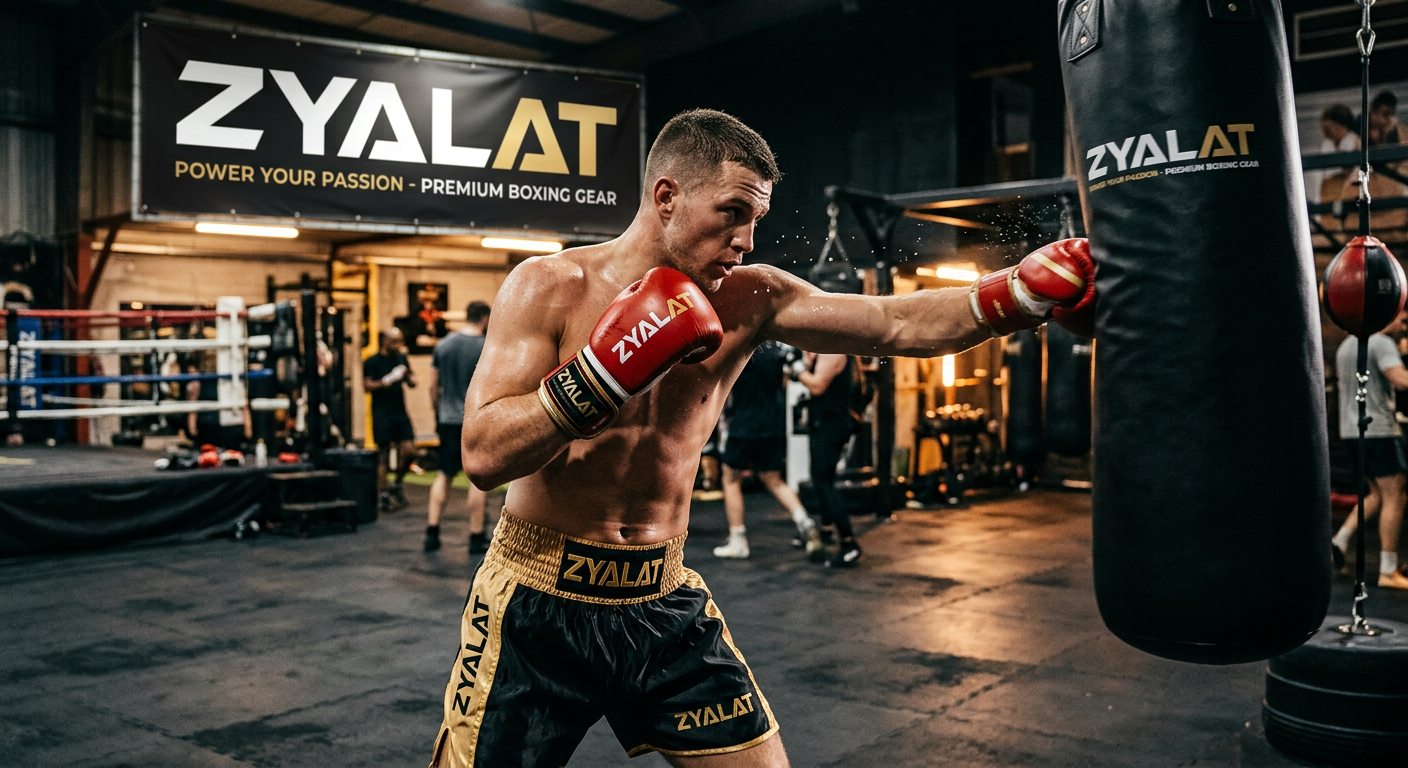
The boxing industry covers every activity connected to the sport: professional and amateur competition, training facilities, coaching, broadcasting, sponsorship and the manufacture and sale of boxing equipment. For suppliers, the most reliable demand comes from training and fitness, since gyms and athletes need equipment every day, not only on fight nights.
Boxing as a Sport and Its Development
Boxing is a striking sport where two competitors fight in rounds, using padded gloves, under defined rules and weight classes. Over time, it moved from loosely organized fights to a structured system with governing bodies, safety rules and standard protective gear. Amateur boxing, Olympic boxing and professional boxing now each have their own formats and equipment requirements.
In recent years, boxing has also moved into mainstream fitness. Cardio boxing classes, boxing studios and home training setups have widened the audience, and equipment makers now serve competitors and fitness users alike.
Training Requirements in Boxing
A typical boxing program includes:
- Shadow boxing and footwork drills
- Heavy bag and speed bag work
- Focus pad training with a coach
- Skipping rope and conditioning
- Sparring with protective equipment
Each activity needs specific gear. Gloves absorb repeated impact and sweat, bags take constant strikes, and wraps and pads face heavy friction. For this reason, the quality of boxing training equipment affects durability, comfort and safety.
Types of Participants and Buyers
- Professional and amateur boxers need dependable, well-fitting gear.
- Boxing clubs and gyms buy in quantity and replace items regularly.
- Fitness studios and schools often need durable, easy-to-clean equipment.
- Retailers and online sellers need a good product range and consistent supply.
- Distributors and private-label brands need reliable boxing equipment manufacturers who can customize products.
Boxing Equipment Manufacturers, Suppliers and Exporters
- Manufacturers produce boxing gloves, punching bags, protective gear and apparel, either under their own brand or for other brands (OEM).
- Suppliers and traders source from manufacturers and sell to gyms and retailers.
- Exporters ship boxing equipment to international buyers and handle documentation, packaging and logistics.
- Distributors hold stock and serve local retail and gym customers.
Some businesses do several of these at once. Pakistan’s sports goods industry, for example, includes manufacturers and exporters in Sialkot who produce a range of sports products for overseas buyers.
The diagram below shows how boxing equipment typically moves from raw materials to the boxer.
3. Types of Boxing Equipment
Boxing Gloves
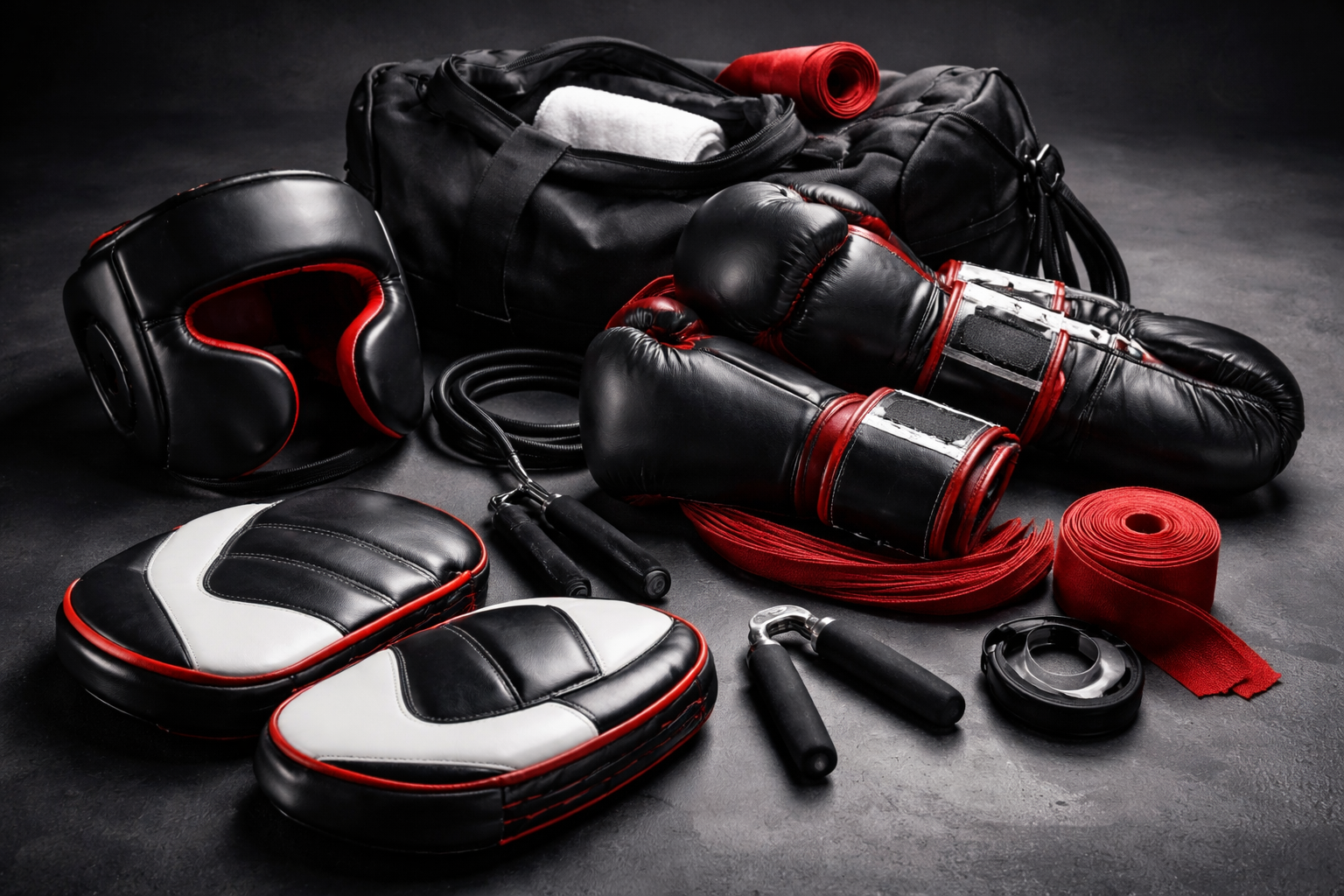
Boxing gloves are the most important item in the sport. They protect the wearer’s hands and reduce the impact on a sparring partner or opponent. Common types include:
- Training gloves for general bag and pad work
- Sparring gloves with extra padding for live practice
- Competition gloves made for sanctioned bouts
- Bag gloves built for repeated heavy bag work
- Fitness gloves for cardio boxing and gym classes
Gloves are sold by ounce weight, commonly 8 oz to 16 oz. Closures are either hook-and-loop or lace-up. Many buyers search for specific options such as leather boxing gloves, sparring gloves and custom boxing gloves, so product variety matters for suppliers.
Punching Bags
Punching bags help boxers build power, timing, accuracy and stamina. The main types are:
- Heavy bags for power punching
- Freestanding bags with a filled base, useful in home gyms
- Speed bags for rhythm and hand speed
- Double-end bags for reflexes and accuracy
- Angled and uppercut bags for specific punches
Size, weight, filling and outer material all affect how a bag performs and how long it lasts.
Hand Wraps and Inner Gloves
Hand wraps support the wrist and protect the small bones of the hand. They come in cotton and semi-elastic versions, in various lengths. Quick wraps and inner gloves offer a faster option. Because they absorb sweat and wear out quickly, they are replaced often.
Focus Pads and Punching Mitts
Focus pads and punching mitts are held by a coach or partner so the boxer can practice accuracy and combinations. Curved pads are common because they match the natural path of a punch. Related items include Thai pads and kick shields, which many gyms stock as well.
Head Guards
Head guards are worn during sparring to reduce cuts and absorb some impact. Styles include open-face, cheek-protector and full-face designs. Buyers should compare fit, padding and visibility.
Mouth Guards
Mouth guards protect the teeth and soft tissue during sparring. Boil-and-bite versions are widely used, while custom-fitted guards are made by dental professionals.
Boxing Trunks
Boxing trunks are designed for freedom of movement, with a wide waistband and a loose cut. Clubs and teams often order them with custom colors, names and logos.
Other Boxing Accessories
- Boxing shoes
- Skipping ropes
- Groin guards and body protectors
- Shin guards and ankle supports
- Gym bags and glove deodorizers
- Timers, floor mats and ring equipment for clubs
Boxing accessories are often the easiest way for retailers to grow order value, since a customer buying gloves often needs wraps, a mouth guard or a bag as well.
4. The Global Boxing Market
Major Boxing Markets and Popular Countries
Boxing has a following on almost every continent. The United States, the United Kingdom, Mexico, Japan, Germany and the Philippines are widely known for their boxing traditions, and many other countries have active amateur and professional scenes. Fitness-driven demand has also grown in cities where boxing gyms and boxing-style fitness studios have opened.
International Demand for Boxing Equipment
- Boxing clubs and training gyms
- Fitness chains and boutique boxing studios
- Schools, colleges and sports academies
- Sports retailers and e-commerce sellers
- Established brands looking for contract manufacturing
- Private-label buyers building their own product lines
Products in Demand by Region
Preferences differ from market to market. Some regions favor traditional leather gloves and heavy bags for serious training, while others buy more fitness-oriented gear, including lighter gloves, freestanding bags and apparel. Retailers and gyms in different countries also have different expectations for packaging, sizing and branding.
Opportunities for Boxing Equipment Suppliers and Exporters
- OEM and private-label production for brands that outsource manufacturing
- Custom boxing gear for clubs, teams and fitness businesses
- Bulk supply to gyms, schools and academies
- E-commerce growth, which lets smaller suppliers reach international buyers directly
- Wider product ranges, including gloves, bags, protective gear and apparel, for buyers who prefer fewer vendors
5. Boxing Equipment Materials and Types
Genuine Cow Leather
Genuine cow leather is a traditional material for gloves and bags. It is valued for durability, a natural feel and its ability to mold to the hand with use. It does need care, since it can dry or crack if it isn’t cleaned and stored properly. It is commonly used in higher-priced gloves and heavy bags.
Synthetic Leather
Synthetic leather is manufactured to look and feel like leather. Quality varies a lot depending on the coating, backing and construction. Better grades can offer good wear resistance and are easy to clean, while lower grades may peel or crack sooner. It is common in entry-level and mid-range products.
PU (Polyurethane)
PU is a common coating used in synthetic leather. PU boxing gloves and bags tend to be easier to maintain and more affordable than leather, with a consistent finish, which is why they are popular for fitness use, beginners and high-volume orders. They do not mold to the hand the way genuine leather does, and performance depends on the quality of the PU layer and the construction underneath.
PVC
PVC is a plastic-based material often used for budget-friendly gym equipment and accessories. It is water resistant and easy to wipe clean, but it is generally less flexible and less breathable than leather or PU. It suits lighter use better than intensive daily training.
Other Commonly Used Materials
- Foam padding in gloves, head guards and focus pads
- Cotton and elastic blends in hand wraps and trunks
- Canvas and nylon in some heavy bags and gym bags
- Satin and polyester in trunks and robes
- EVA and thermoplastic materials in mouth guards
- Mesh panels for ventilation in gloves and apparel
Matching Materials to Use
No single material suits every purpose. Intensive training may call for leather, fitness classes may be well served by PU, and low-cost items for light use may use PVC. Buyers should look at construction, stitching and padding as well as the material name.
The table below compares the most common materials used for boxing gloves and punching bags, so buyers can see the main differences at a glance.
| Material | Feel and Look | Care Needed | Typical Use |
|---|---|---|---|
| Genuine cow leather | Traditional feel, molds to the hand with use | Needs regular cleaning, drying and proper storage | Heavy bags and higher-priced gloves |
| Synthetic leather | Leather-like look; includes PU, microfiber and vinyl, so quality varies by grade | Usually minimal care | Entry-level and mid-range products |
| PU (polyurethane) | Smooth, consistent finish; does not mold to the hand like leather | Easy to maintain | Fitness gloves and beginner gear |
| PVC | Plastic-based, generally less flexible than newer PU | Minimal care, wipe clean | Budget gym items and light-use accessories |
6. Leading Boxing Brands and Industry
Established Boxing Brands
Several well-known boxing brands have built lasting recognition in boxing and combat sports. Each has its own history and focus. Some are known for professional-level gloves, others for wider combat sports ranges or retail distribution.
Influence on the Global Boxing Industry
Established brands shape design preferences, such as padding styles and closure systems, and they set expectations for sizing, packaging and presentation. Athlete sponsorships also influence what amateur and fitness users choose to buy.
What This Means for Suppliers and Buyers
Many brands and smaller labels work with contract manufacturers, so brand-driven demand creates room for reliable boxing equipment manufacturers. Suppliers should not claim any link to a major brand unless a real agreement exists, and buyers should confirm any such claims before ordering.
7. How to Choose Boxing Equipment
Intended Use and User Level
Training, sparring and competition gloves are not interchangeable. Beginners usually need comfortable, versatile gear, while experienced boxers may need specialized equipment.
Size, Weight and Fit
Glove weight, wrap length, head guard size and trunk fit all affect comfort and safety. Clubs buying for many users should stock a range of sizes.
Material and Build Quality
Check the outer material, padding, stitching, seams and closures. Weak stitching and thin padding are common causes of early failure. Where possible, inspect a sample before a bulk order.
Durability and Maintenance
High-use gyms need products that handle frequent training and moisture, while home users may be fine with lighter-duty equipment.
Safety and Competition Requirements
Competition gear may need to meet specific rules set by governing bodies or event organizers. Buyers should confirm the requirements that apply to them.
Price and Value
The lowest price is not always the best value. Compare expected lifespan, replacement terms and the cost of replacing damaged gear.
Customization and Branding
Clubs and retailers often want custom logos, colors, labels and packaging. Ask about customization methods, minimum order quantities and lead times.
Choosing a Supplier
Wholesale and export buyers should also look at:
- Consistency between samples and bulk orders
- Production capacity and delivery time
- Communication and responsiveness
- Export experience and packaging standards
- Willingness to share clear, verifiable product information
8. Challenges in the Boxing Industry
Competition
The market is crowded with established brands, new online labels and many manufacturers. Suppliers need strengths such as workmanship, customization and reliable delivery, not just a low price.
Pricing Pressure
Buyers compare prices across many suppliers, which squeezes margins. Material costs, labor costs and currency changes also affect pricing. Very low prices can indicate compromises in materials or construction.
Product Consistency
Keeping the same quality across large orders is difficult. Differences in material batches, stitching or padding can lead to uneven products, so clear specifications and quality checks are important.
International Shipping
Bags and bulk glove orders can be heavy or bulky. Freight costs, port delays, customs rules and packaging damage are all real concerns for exporters.
Changing Customer Demand
Buyers move between traditional leather gear and lighter fitness-oriented products, and between plain and fashion-focused designs. Suppliers need to follow what gyms, retailers and users actually want.
Sourcing Challenges
Quality raw materials, skilled labor and a dependable supply chain are essential. Availability and cost of leather, synthetic materials and padding components can change, and responsible sourcing is becoming more important to many buyers.
9. Future of the Boxing Industry
Growth in Boxing Fitness
Boxing-based workouts continue to attract people who want a full-body routine without competing. This widens the customer base for gloves, bags, wraps and apparel, and supports demand for home training setups.
Technology and Smart Training Equipment
Some manufacturers are adding sensors and connected features to bags and gloves to track punch speed, count or force. Online coaching and training apps are also changing how people practice. It is still unclear how widely these products will be adopted, but interest in measurable training is growing.
Customization and Private Labeling
Custom boxing gear is becoming more common. Gyms, clubs and online brands want their own designs and packaging, and suppliers who offer flexible customization are well positioned.
Materials and Sustainability
Buyers are paying more attention to materials, production practices and product lifespan. Suppliers should avoid environmental claims they cannot support.
E-commerce and Direct Sales
Online platforms give suppliers wider access to international buyers. Accurate descriptions, clear specifications and good product photography matter more than ever.
Future Predictions (Next 5 to 10 Years)
Over the coming years, the industry is likely to see continued interest in boxing fitness, more customization, wider use of training technology and stronger attention to quality and transparency. Suppliers who focus on consistent quality and reliable service should be best placed to grow.
10. Conclusion
Boxing is more than a spectator sport. It is a global training discipline, a fitness trend and a steady commercial market built around equipment that needs regular replacement. From boxing gloves and punching bags to hand wraps, head guards and apparel, each product category serves a clear need for athletes, coaches and gyms.
For buyers, the best results come from matching equipment to purpose, checking materials and construction, and working with suppliers who are open about their products and processes. For suppliers and exporters, the opportunities lie in consistent quality, flexible customization and dependable international service.
As boxing fitness grows, e-commerce expands and training technology develops, the industry is likely to stay active and competitive. The key takeaway for aspiring suppliers is simple: focus on quality, understand what buyers need and build long-term trust.
11. Frequently Asked Questions (FAQs)
1. What are the main types of boxing equipment?
The main items are boxing gloves, punching bags, hand wraps, focus pads, head guards, mouth guards and boxing trunks. Gyms and clubs also use skipping ropes, boxing shoes, body protectors and floor mats.
2. Which material is best for boxing gloves?
It depends on use and budget. Genuine cow leather is valued for durability but needs regular care. PU and synthetic leather are lighter, easier to clean and often more affordable.
3. How do I choose the right boxing glove weight?
Glove weight is measured in ounces. The right choice depends on body weight, training type and any competition rules. Heavier gloves are often used for sparring, while lighter ones are common for bag work.
4. What should wholesale buyers check before ordering boxing equipment?
Ask for samples and check stitching, padding, closures and finishing. Also confirm minimum order quantities, lead times, customization options, packaging and payment terms, and the supplier’s export experience.
5. Can boxing equipment be customized with logos?
Yes, many manufacturers offer custom logos, colors, labels and packaging. Methods and minimum quantities vary by supplier, so confirm them before ordering.
6. What is the difference between training gloves and sparring gloves?
Training gloves are general-purpose gloves for bag and pad work. Sparring gloves usually have more padding to protect both partners during live practice.
7. How often should boxing equipment be replaced?
There is no fixed timeline. Replace gear when padding is compressed, seams are damaged, closures fail or material cracks. Hand wraps and mouth guards usually need replacing more often than gloves.